Vol. 2 No. 3 (2026): July-September
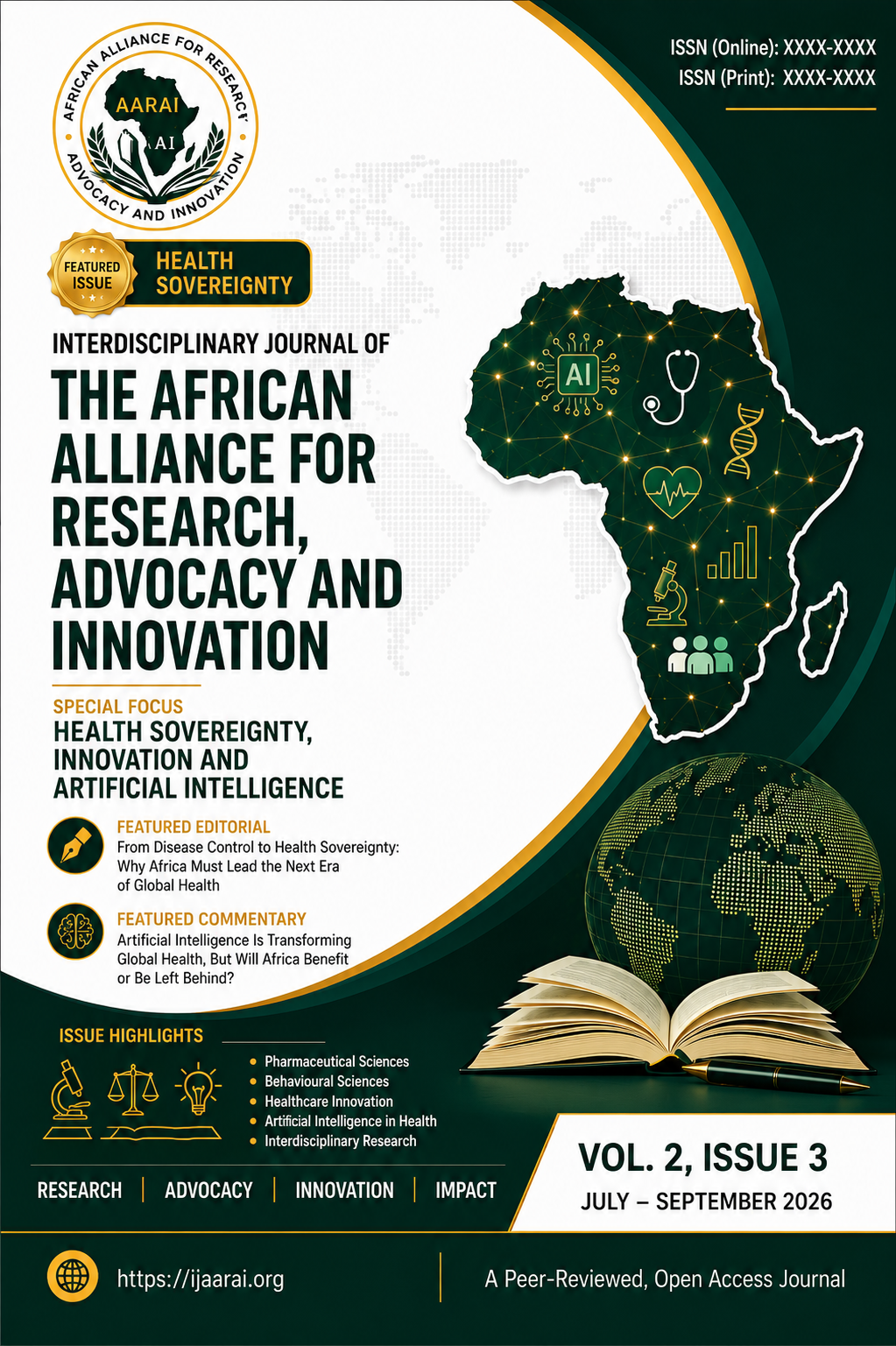
Volume 2, Issue 3 (July–September 2026)
The July–September 2026 issue of the Interdisciplinary Journal of the African Alliance for Research, Advocacy and Innovation (IJAARAI) explores one of the defining questions of our time: How can Africa and the Global South strengthen their capacity to shape their own future through research, innovation, and equitable partnerships?
The issue opens with an editorial, "From Disease Control to Health Sovereignty: Why Africa Must Lead the Next Era of Global Health," which argues that the continent must move beyond dependence on externally driven health agendas towards greater ownership of research, innovation, policy, and healthcare systems. The editorial calls for sustained investment in scientific capacity, interdisciplinary collaboration, local manufacturing, and evidence informed decision making as essential pillars of health sovereignty.
Complementing the editorial is a timely commentary, "Artificial Intelligence Is Transforming Global Health, But Will Africa Benefit or Be Left Behind?" The commentary examines the rapid growth of artificial intelligence in healthcare and considers both its promise and its challenges for Africa. It highlights the need for digital infrastructure, ethical governance, local expertise, and inclusive policies to ensure that artificial intelligence becomes a tool for improving health equity rather than widening existing disparities.
Beyond these opening perspectives, this issue presents original research and scholarly reviews spanning public health, clinical sciences, pharmaceutical sciences, behavioural sciences, healthcare innovation, and interdisciplinary research. Collectively, the articles reflect the journal's commitment to advancing knowledge that addresses real world challenges while promoting collaboration across disciplines and regions.
As Africa continues to navigate changing health priorities, technological advances, and evolving global partnerships, this issue encourages researchers, practitioners, policymakers, and educators to contribute to building resilient, locally driven, and globally connected systems that improve health and sustainable development across the continent and beyond.
We hope the scholarship presented in this issue stimulates thoughtful discussion, informs policy and practice, and inspires new research collaborations dedicated to advancing knowledge and transforming lives.
Published:
2026-07-06