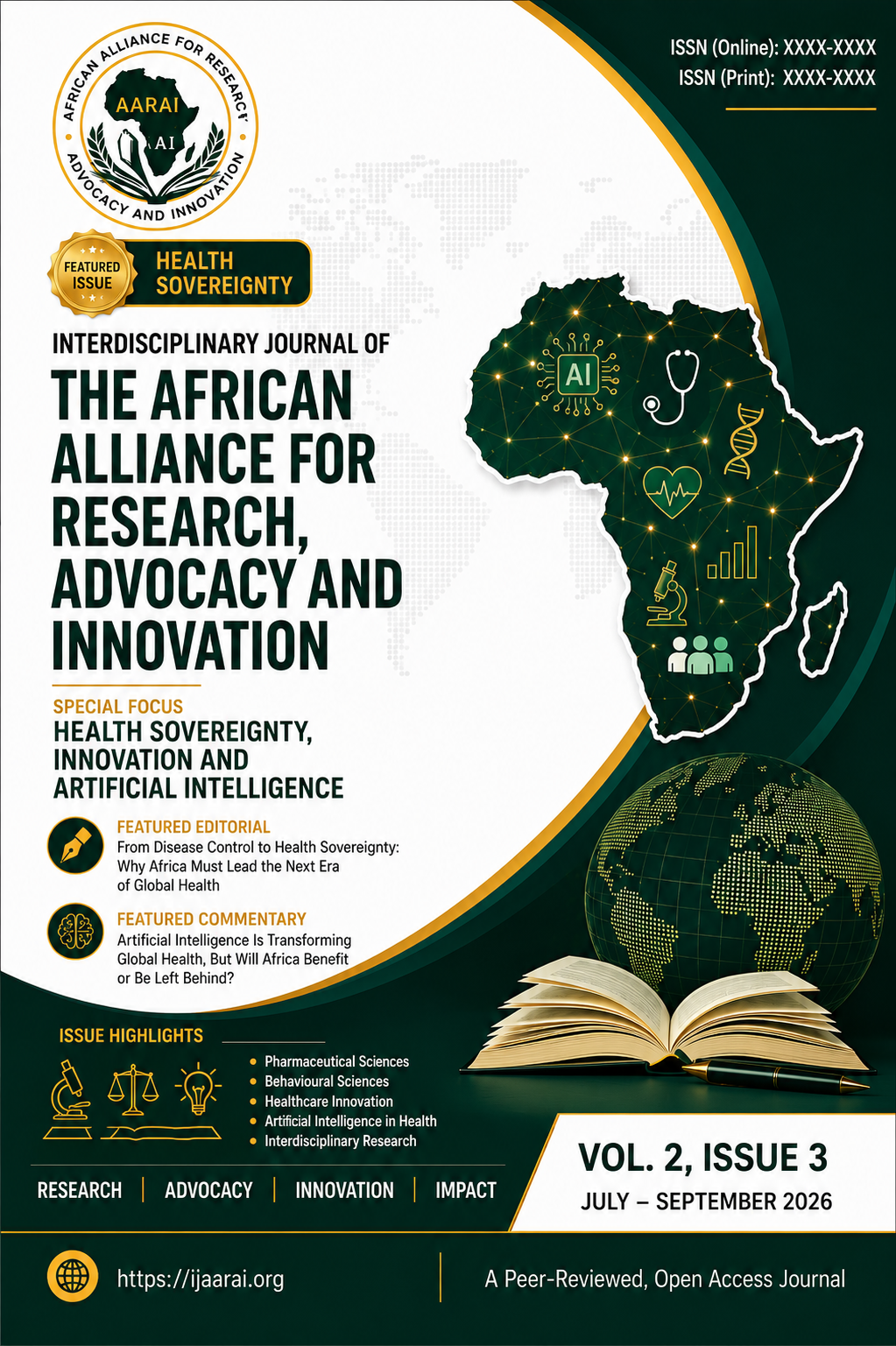
Artificial Intelligence Is Transforming Global Health, But Will Africa Benefit or Be Left Behind?
DOI:
https://doi.org/10.64261/ydge6586Keywords:
Artificial intelligence, digital health, global health, Africa, health systems, health innovation, digital transformationAbstract
Artificial intelligence is rapidly changing the way health systems deliver care, generate knowledge, and support decision making. Across the world, AI is being used to strengthen disease surveillance, improve diagnostic accuracy, accelerate drug discovery, and expand access to healthcare through digital platforms. These developments present important opportunities for Africa, where persistent shortages of healthcare workers, growing disease burdens, and unequal access to specialist services continue to challenge health systems.
At the same time, the benefits of AI will not be realised automatically. Without deliberate investment in digital infrastructure, local research capacity, data governance, ethical regulation, and workforce development, there is a real risk that Africa will remain primarily a consumer of technologies designed elsewhere. Such an outcome could deepen existing inequalities and limit the continent's ability to shape technologies that reflect its own health priorities and cultural contexts.
This commentary argues that the future of AI in African healthcare should be guided by local leadership, interdisciplinary collaboration, and equitable partnerships. It calls for governments, universities, researchers, healthcare institutions, and the private sector to work together to build an innovation ecosystem in which artificial intelligence strengthens health systems while advancing scientific independence. Africa's role in the AI era should extend beyond technology adoption to active leadership in developing solutions that contribute to both regional and global health
References
African Union. (2024). Continental artificial intelligence strategy. African Union Commission.
United Nations Educational, Scientific and Cultural Organization. (2021). Recommendation on the ethics of artificial intelligence. UNESCO.
World Health Organization. (2021). Ethics and governance of artificial intelligence for health. World Health Organization.
World Health Organization. (2021). Global strategy on digital health 2020–2025. World Health Organization.
World Health Organization. (2024). World health statistics 2024: Monitoring health for the Sustainable Development Goals. World Health Organization
Downloads
Published
Issue
Section
Categories
License
Copyright (c) 2026 Dr Eric Kwasi Elliason (Author)

This work is licensed under a Creative Commons Attribution-NonCommercial 4.0 International License.